Venues and productions want visible differentiation without taking on operational risk or hiring specialized staff. Pyro, lasers, and projection solved this decades ago with the operated-FX model: a specialist designs the effect, installs the infrastructure, and runs it as a service. Aerial effects — small, autonomous, flown elements moving through a room — haven’t had that model until now.
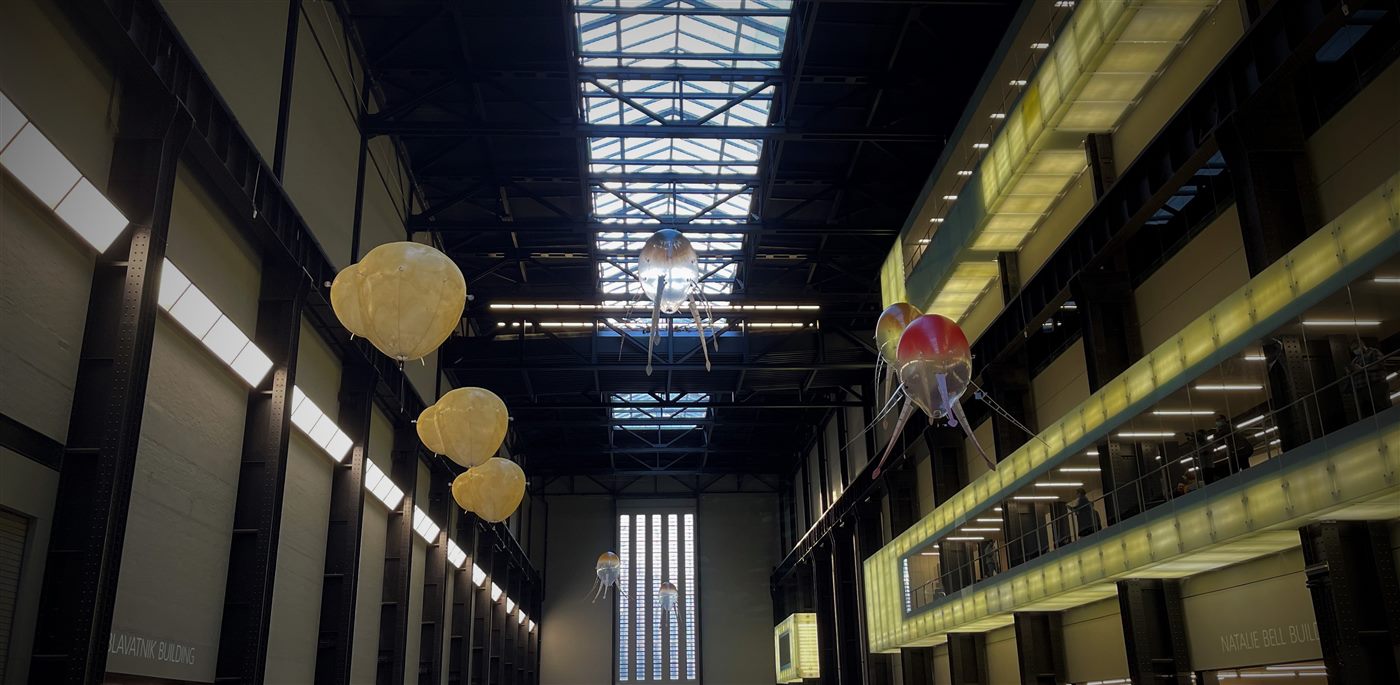
Embedded, not standalone. Our effects live inside your show — a residency, an arena moment, a gala — not as a freestanding attraction. We design around your content, your run schedule, and your venue.
How engagements are shaped
The simplest way in: rent the effect, and our crew operates it. Aircraft, pilots, and maintenance arrive as one service, for a one-off event or a short run. No buildout, no infrastructure.
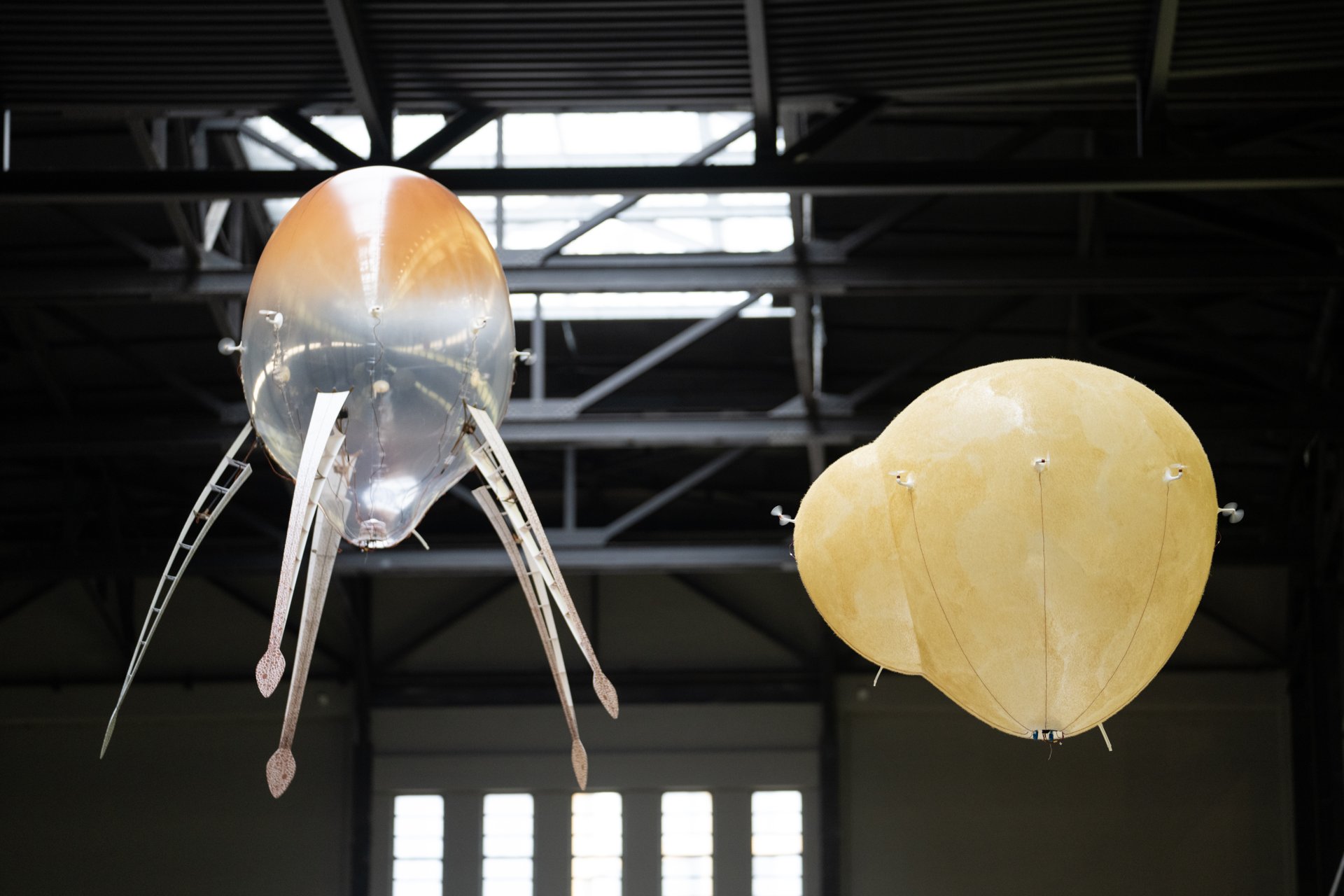
Most of our work is custom: we design and build a fleet around your IP and your venue — creatures, characters, scenic elements — and operate it the same way.
For flagship venues and residencies, it can go one step further: a one-time venue infrastructure buildout (the flight volume, charging and servicing points, and safety systems the effect needs, treated like AV infrastructure), content updates as your programming changes, and fully managed show operation night after night. That’s the full model — the ceiling, not the entry point.
Piloted or autonomous?
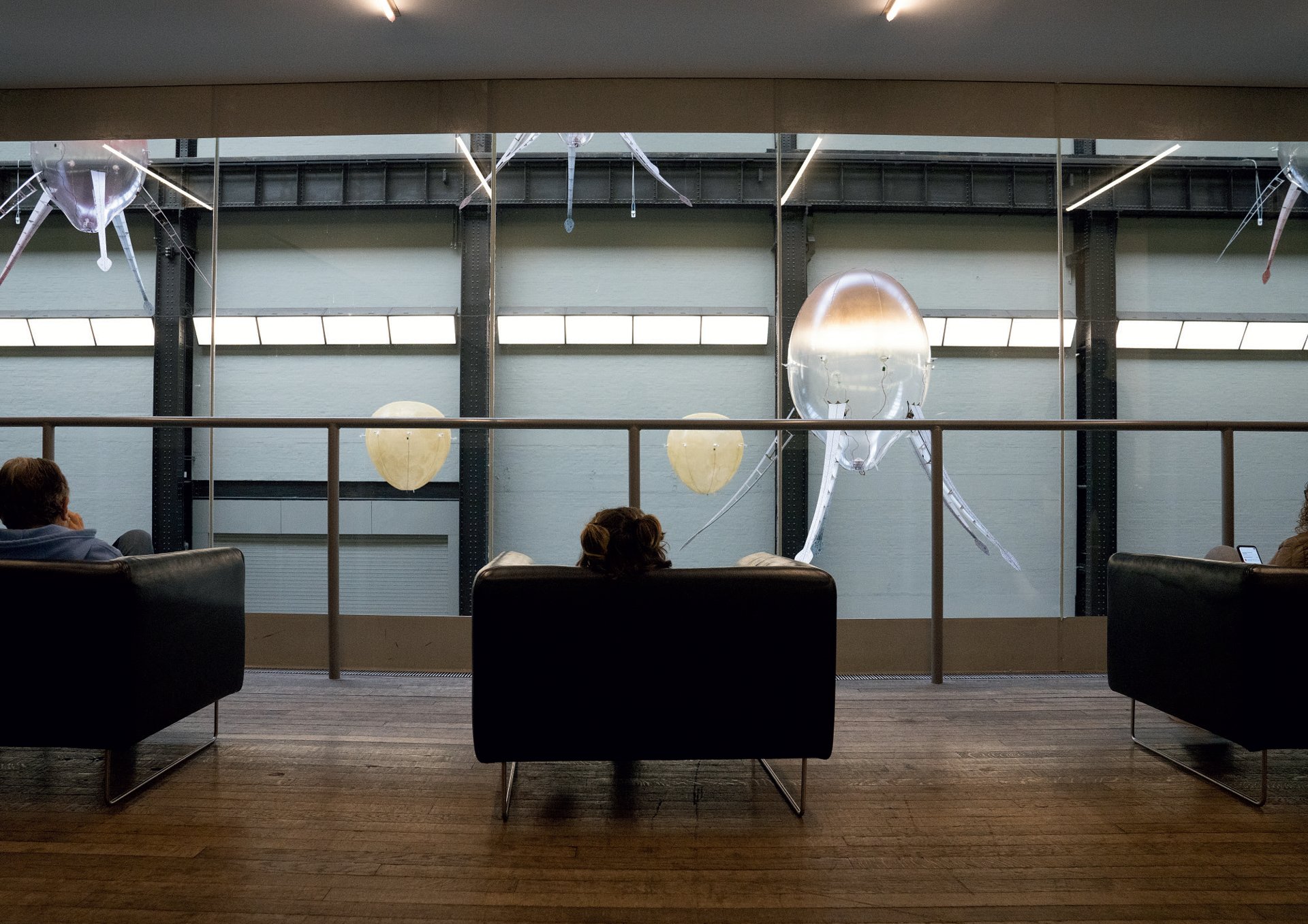
Both — it’s an economics decision, not an ideology. Manual piloting fits one-off events and short runs: championship pilots, minimal setup, no automation to commission. Autonomy fits large fleets and long-running shows, where automating the choreography costs less than staffing it night after night — the same autonomy proven in four months of continuous public flight at Tate Modern. Either way, the pilot standard applies: autonomous shows run with pilot-grade oversight, and every system degrades gracefully to a hand on the sticks.
Offers & pricing
Rentals
$50,000–$100,000 / engagement
Pre-existing effects, manually flown or autonomous. The fastest way to bring an operated aerial effect into a show — start here, before committing to a residency.
Custom Aerial Fleets
$100,000–$500,000 / project
Purpose-built creatures, characters, or scenic elements designed for your IP and your venue.
Annual Operations
$2,000–$4,000 / show
Operations on an installed, automated fleet — long-run residencies and seasonal programs where the custom fleet and venue infrastructure are already in place. The per-show number falls as cadence rises: high-cadence residencies price at the bottom of the range, weekly and seasonal programs toward the top. Crewed single-night engagements are quoted as rentals.
How much does an aircraft weigh?
Under 1 kg filled; most of the fleet is under 100 g. Helium-assisted, not motor-lift — that’s what makes flight over an audience viable.
How big are they?
Dirigible-style creatures run 1 meter and up; ornithopter-style creatures are under 1 meter wingspan.
How much payload can an aircraft carry for an effect (lighting, sound, etc.)?
100–200 grams, typical for the lighting and sound packages built into an effect.
Is the show flown by a pilot, or autonomous?
Either, chosen by what the show needs: manual piloting for one-off events and short runs, autonomy for large fleets and long-running shows — with pilot-grade oversight either way. See Piloted or autonomous? above.
Do we need an FAA license to fly indoors?
No. Per the FAA’s published guidance, the National Airspace System does not extend inside enclosed structures — indoor flight in a fully enclosed venue sits outside FAA licensing and registration requirements: no Part 107 certificate, no waivers. What does apply indoors: venue safety review, fire-marshal and local-authority requirements, and insurance for flight over an audience — and handling those is part of every engagement.
Who flies it?
Pilots are provided as part of the engagement, drawn from our vetted bench — see the pilot standard. Venue staff can also be trained where that fits the operating model.
What happens when something needs maintenance?
Maintenance is part of the managed service — aircraft are serviced and swapped as part of ongoing operations, not a separate call.