For most vendors, tracking is a value-add. For us it’s load-bearing: large-volume tracking is the discipline underneath autonomous indoor flight, and it’s how our fleets have flown above live audiences for months at a stretch — mission-critical, not demo-grade. What we rent out is that working practice: the system, the operators who run it, and the knowledge of what it takes to make tracking hold up in a real venue.
Our specialty is scale. Most motion-capture practice is built around a one-person capture studio — a performer on a stage the size of a room. Ours is built the other way: whole galleries, ballrooms, arenas, and show floors, tracking many people and objects at once, in spaces a studio rig was never meant to cover.
If cameras aren’t the right fit
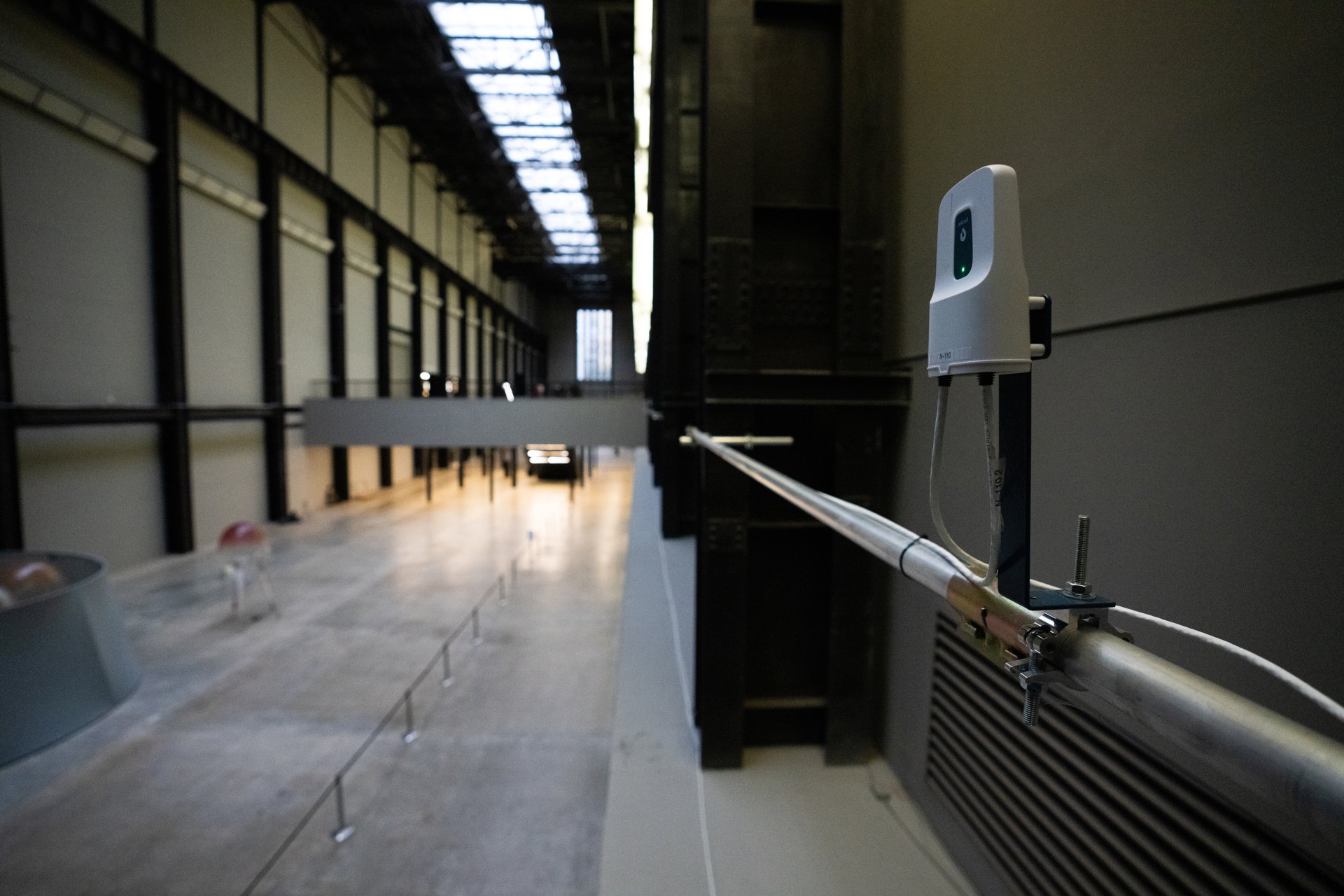
Optical capture needs line of sight. For spaces that can’t offer it — crowds, scenery, structure in the way — we also operate ultra-wideband (UWB) tracking systems: radio tags instead of markers, no line of sight required, covering large spaces affordably. Tell us about your application and we’ll tell you which system fits.
Three ways to engage
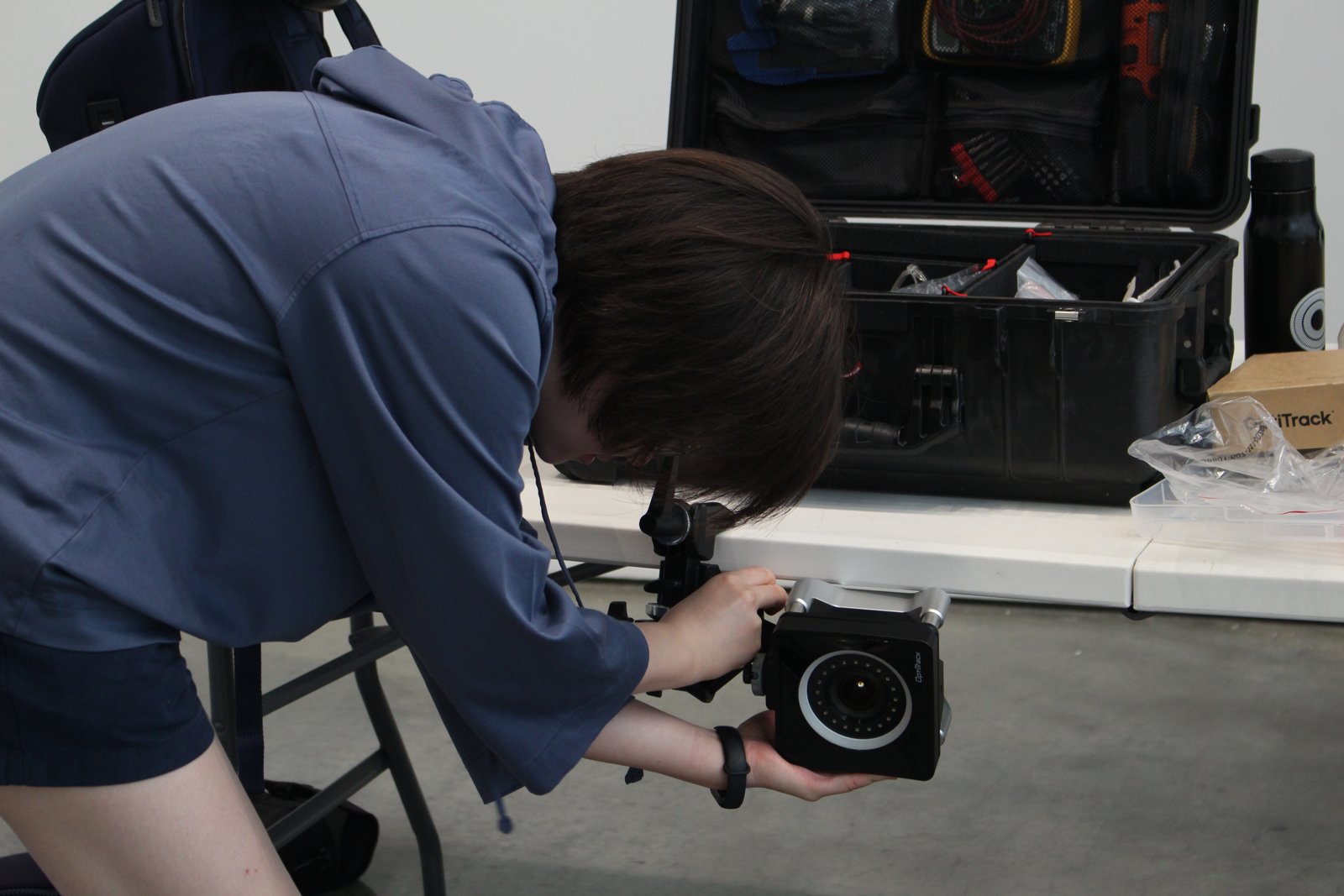
- Rental with operator. The system arrives with someone who runs it — site survey, rigging, calibration, capture, teardown. You get tracking data, not a systems-integration project.
- Production integration. We integrate tracking into an existing show, booth, or virtual-production pipeline — feeding your engine, your media server, or your robotics stack in real time.
- R&D support. Ongoing capture capacity for teams developing something — robotics, autonomy, biomechanics — who need a serious volume without buying one.
Why rent tracking from a flight studio
Because we’re the customer this equipment was built for, not a reseller of it. The autonomy proven at Tate Modern’s Turbine Hall — four months of continuous public flight above visitors, methods published as a peer-reviewed SIGGRAPH paper — flew on exactly this discipline. When you rent the volume, you also get what running it under show conditions taught us: occlusion, interference, rigging real venues, and keeping a tracking system trustworthy for weeks at a time. Tate Modern — In Love With The World → · An Aquarium of Machines (SIGGRAPH 2022) →
Specs
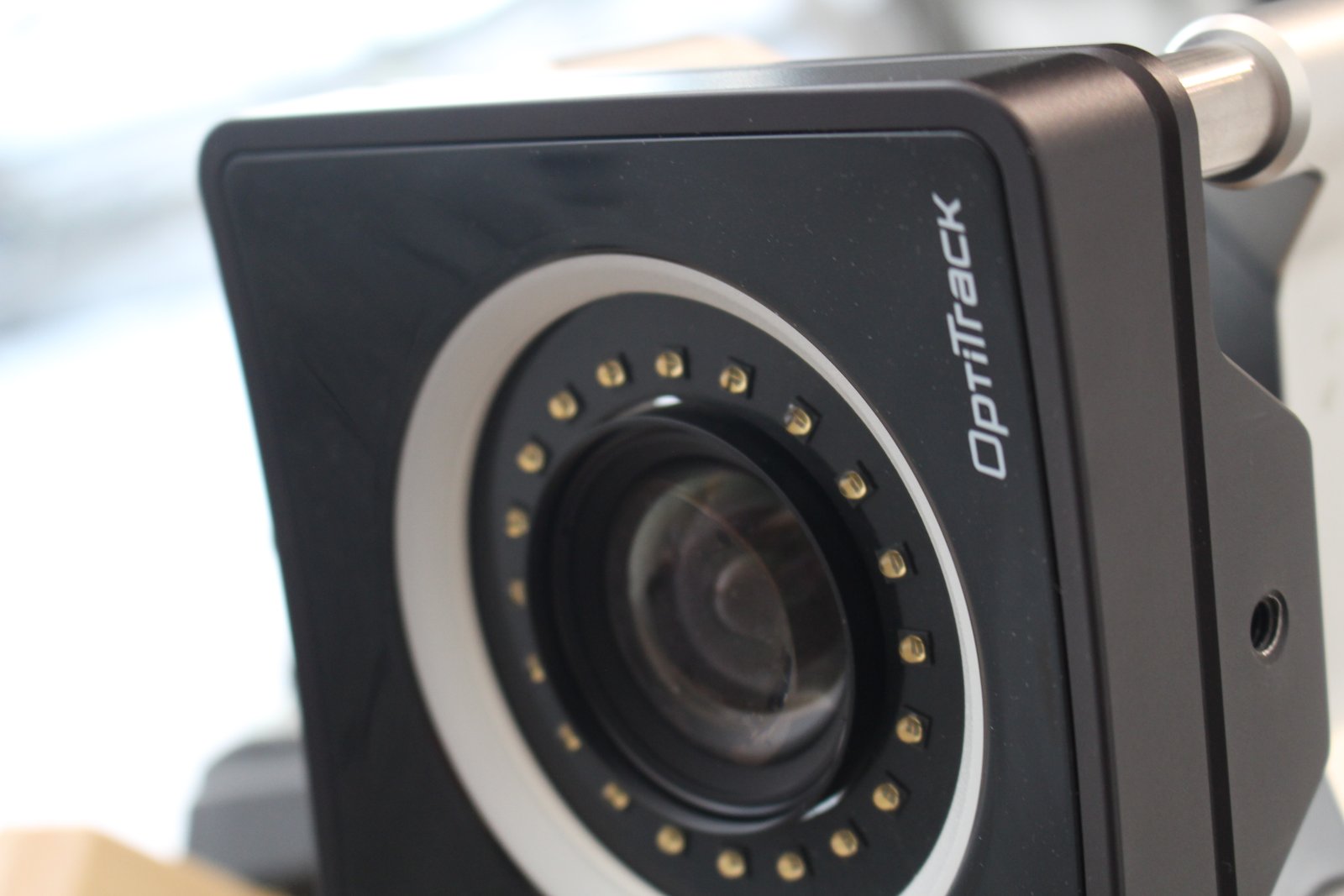
- Optical: 12× OptiTrack Prime 17W
- Capture volume: up to 20×20 ft (6×6 m) for full-body motion capture; up to 30×30×15 ft (9×9×4.5 m) for rigid-body, robotics, and drone tracking — final volume confirmed at site survey
- Rate: from $3,500/day, operator included — trade-show weeks from $12,500
- An operator is part of every engagement
- Insurance is bound for every engagement
How it works
- Site survey. We look at your space — mounting, sightlines, lighting, interference — and tell you what the volume will actually be, before anything ships.
- Setup & calibration. Cameras or anchors rigged, volume calibrated, data validated.
- Operation. Our operator runs capture for the duration — a day’s shoot, a week’s trade show, a production run.
- Strike. The system comes out as cleanly as it went in.
Use cases
- Live-event tracking — performers, props, and scenic elements driving media in real time
- Trade-show booths and product demos — interactive demos that respond to people and products in real time
- Visitor & asset tracking — people and objects moving through a building-scale space, feeding interactive media or operations
- Virtual production — camera and object tracking feeding your engine
- Robotics and R&D — ground-truth positioning for autonomous systems, the same way we use it ourselves
- Biomechanics — movement capture at research precision
Do we need motion-capture experience?
No — the operator is part of the service. You describe what you need tracked and what should receive the data; we handle the rest.
Can it track drones and robots?
Yes — that’s our home use case. Large-volume tracking is how autonomous indoor flight is flown, and ground-truth tracking for robotics is precisely what the system is built for.
How far will you travel?
Based in Las Vegas — on the Strip, at the convention centers, same-day. We also serve LA-based productions; the system travels.
What data do we end up with?
Real-time streams into your engine or media server during the engagement, and recorded capture data delivered in the formats your pipeline uses.